
One project. Every party on the same record.
Whoever owns the project sets it up, and everyone else joins with the role they need. The workflow stays the same.
Wherever construction has to be inspected.
Nothing is fixed to one industry or one stage. Each project defines its own assets, stages and tests.

Commercial and healthcare
Towers, hospitals and laboratories: every inspection point tied to its stage, its checklist and its sign-off, from first fix to handover.
QA/QC teams →
Commissioning and handover
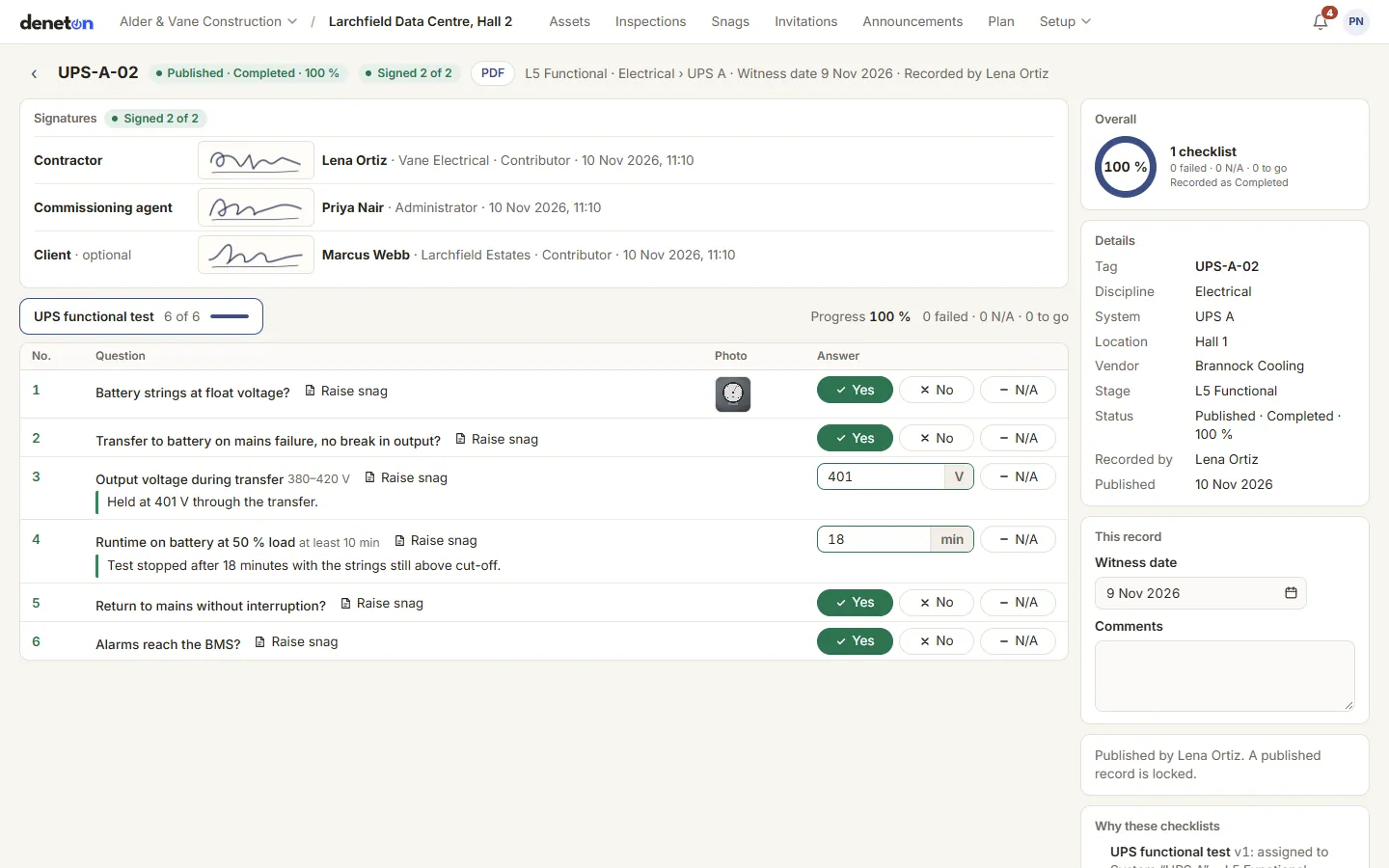
Start-up and functional tests with readings on record, then signed reports for the handover pack.
Commissioning teams →
Power and MEP
Switchgear, generators and plant, from factory test to energisation.
See solutions →
Data centres
Thousands of assets, five levels of testing and three parties at every witness. This is the work Deneton was first built around.
One example: data centres →
Made for the pace of data centre commissioning.
Thousands of assets across electrical, mechanical and controls, five levels from factory witness to integrated systems testing, and a contractor, an agent and a client at every witness.
- L1 to L5 in one trackerEvery asset at every level, with gates between them.
- Hall by hall, system by systemCategories for discipline, system and location.
- Scale without slowdownTens of thousands of items open like a small project.
- Signed handover recordsThree-party signatures and PDFs for the client.
Run every stage from one record.
Define the stages, assign the checklists, invite the contractor to witness and hand over signed reports. Progress and open snags are visible to the whole team.
- Stage gates that warn or block
- Witness invitations with readiness per item
- Signed PDFs for the handover pack
Book witnesses that will actually happen.
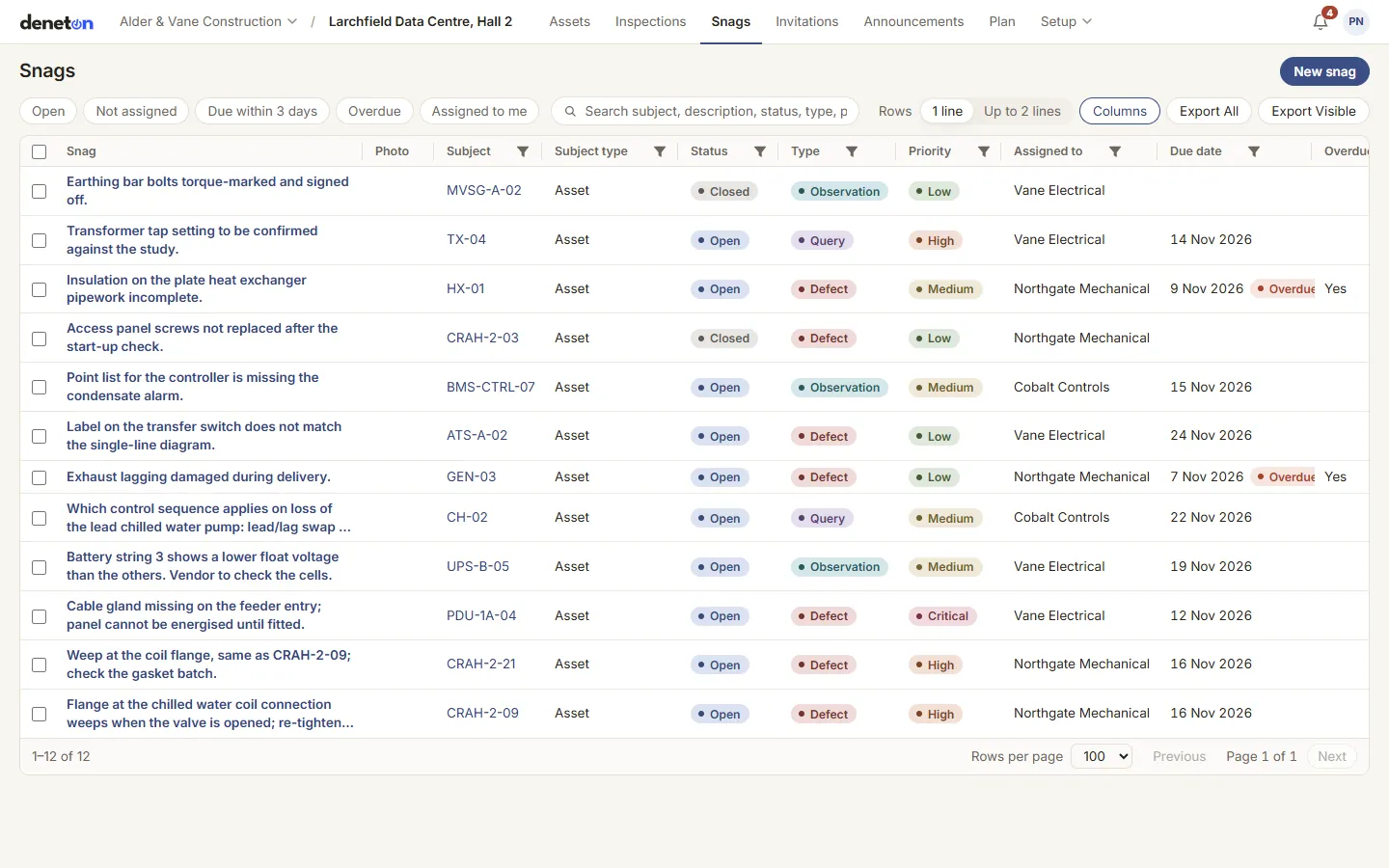
See which items are ready before you invite anyone, track the plan against what was witnessed, and close snags before they hold up handover.
- Readiness for the next seven days at a glance
- Schedule dates linked to items
- Snags assigned straight to the trade
Your own account. Only your work.
Join the project as a guest with the account you already have. Your role can limit you to your company’s items and snags, and you sign your own slot.
Progress without asking for a report.
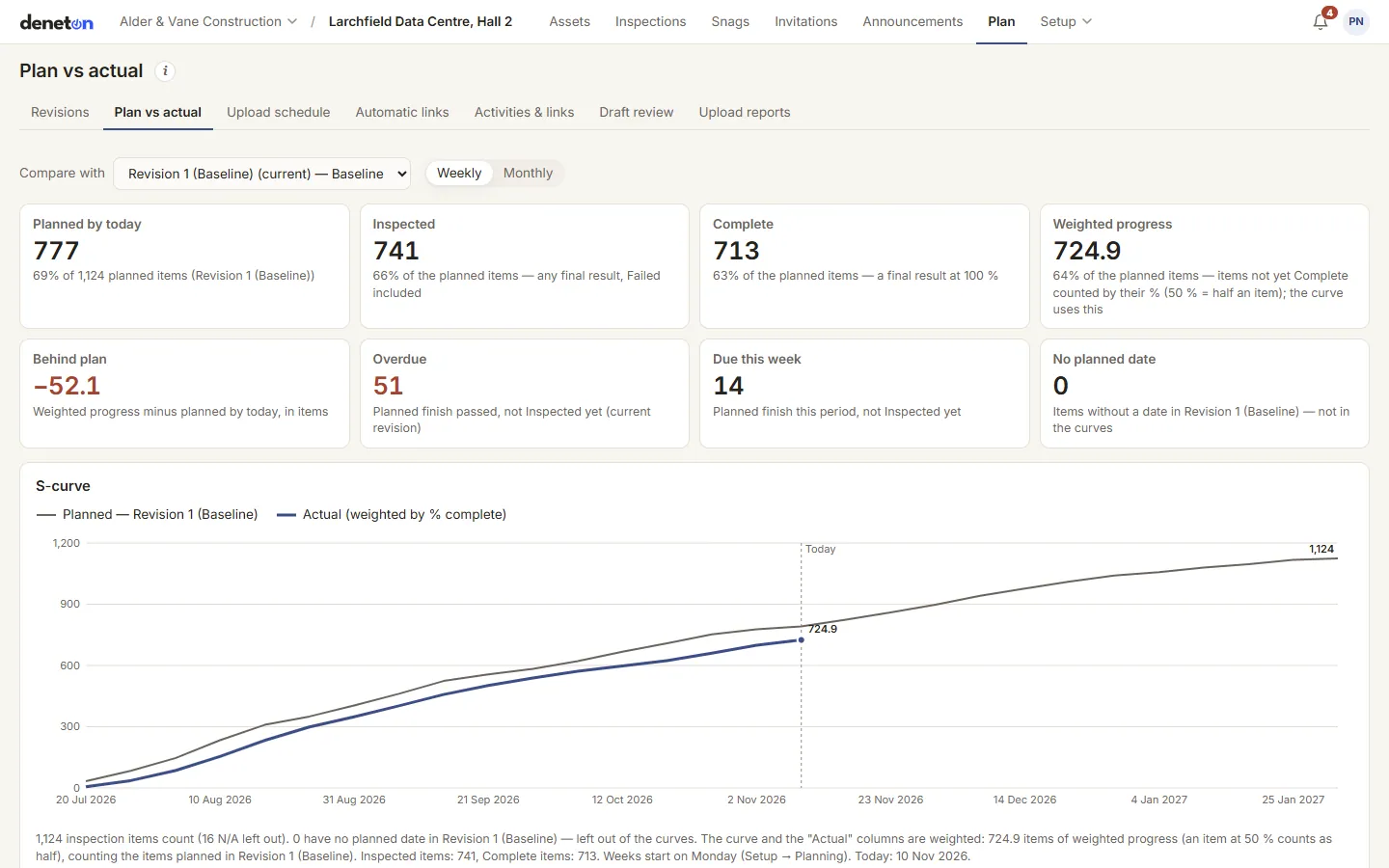
Follow progress against the baseline, sign off where you need to, and receive records that stay exactly as they were witnessed.
Inspection and test plans on the same model.
Map each inspection point to a stage, write its checklist, and let readiness rules hold the next activity until the last one is accepted.
- Your termsStages and outcomes named the way your plan names them.
- Non-conformancesRun as snags with owners, priorities and due dates.
- Company limitsRoles that keep each company to its own work.